Alice Drowns the Twins
Las madres noAlice Espanet’s drowning of her twins, Alex and Angela, is presented both as a planned act and as a reconstruction whose crucial detail remains unknowable: Alice has always said she cannot remember which child she killed first. Forensic evidence settled the manner of death, but not the full human meaning of the crime, a distinction that shapes the Narrator’s account of the event and its aftermath.
Planning and Reconstruction
Alice chose a Thursday afternoon, when the nanny was off and her husband was away. She fed the twins half a pear, mashed with a fork, and then some formula—their last snack, as the autopsy later confirmed. She undressed them and left one on the floor, though the Narrator cannot be certain which child it was. Alice drowned the first baby in about a minute, placed the body on the bed, and took the second in her arms. The account describes her as already expert at drowning children, a chilling measure of how deliberately the act is reconstructed.
Forensic Findings and Uncertainty
The house’s security cameras ruled out the possibility that anyone else had entered while the twins were killed. The autopsy confirmed that both children drowned in the bath, and the water samples matched. These findings made the basic crime clear to investigators, but they could not establish which twin died first. Alice has consistently said she does not remember; the forensic evidence can place both deaths at roughly the same time, but cannot resolve their order. The record thus fixes the act’s physical circumstances while leaving one intimate sequence beyond recovery.
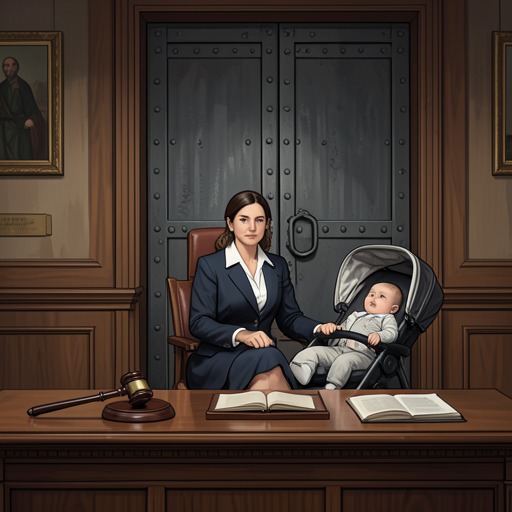
At trial, the green plastic tub was brought into the courtroom as the murder weapon. It had a picture of a moustached seal on one side, and an assistant wheeled it around on a metal table to show the forensic police and then the jury. The Narrator recalls the scene as grotesquely comic: the seal, the assistant’s plastic gloves, and jurors craning their necks stood against the shadow of the two murdered babies. The mundane object became evidence, but its ordinary, almost childish appearance could not make the deaths easier to comprehend.
The Children’s Names and the Limits of the Record
The prosecutor was the first to say the twins’ names aloud: Alex and Angela. Until then, the Narrator had not known them, or had not noticed that she did not know them. In her account they had been reduced to categories—the children, the babies, the twins, the bodies, the ashes. Their names gave them a distinct identity, and with that recognition came greater difficulty in facing what had happened to them.
The trial’s evidence could clarify the crime in its simplest terms, but, for the Narrator, it could not explain the emotional reality behind it. She had tried to absorb even repetitive or apparently superfluous details, believing that small particulars mattered; still, the cameras and autopsy answered questions about entry and cause of death rather than resolving the human mystery she calls the ghost of the case. The uncertainty over which child died first remains part of that limit: the facts establish the drowning, while the sequence and its meaning resist certainty.